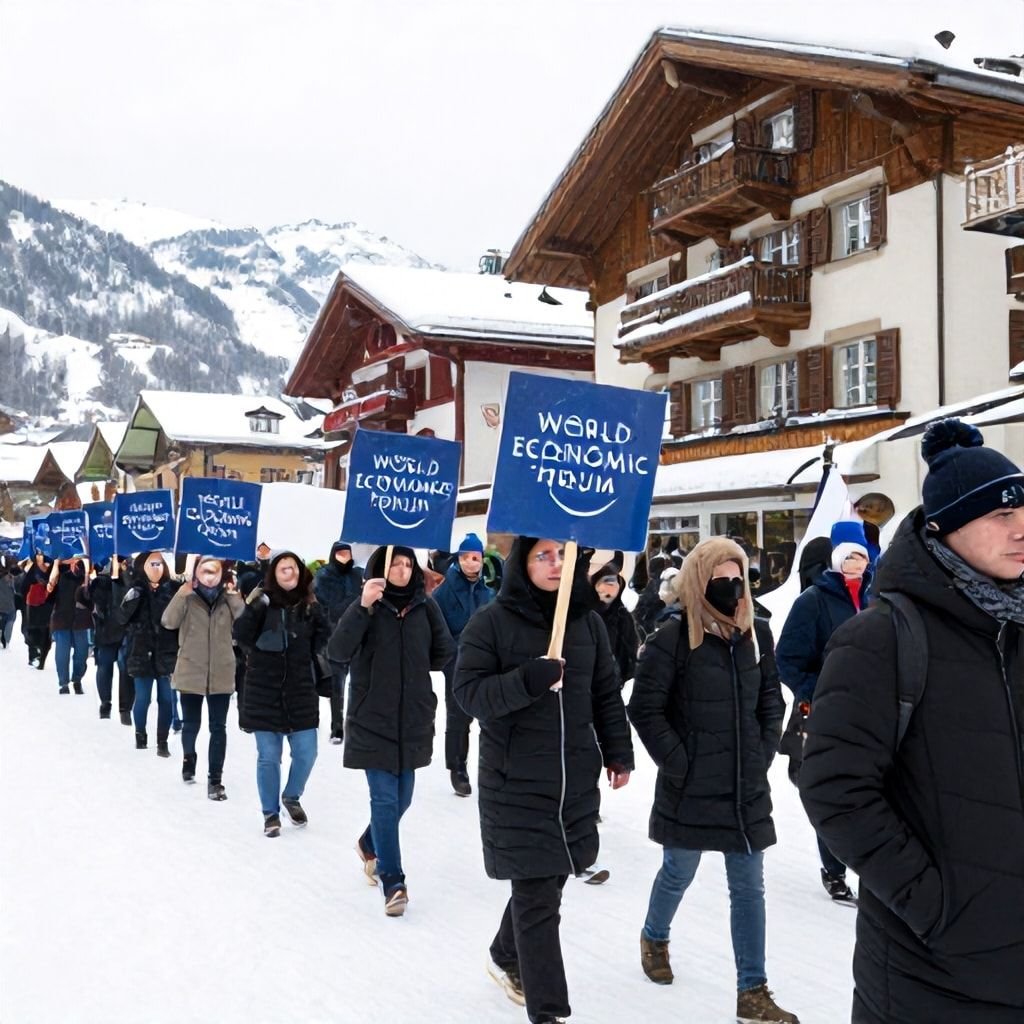
Each year, the tranquil Swiss mountain town of Davos transforms into a bustling hub for the World Economic Forum (WEF). Indeed, it attracts world leaders, business titans, and influential thinkers. However, it also consistently draws another significant presence: protesters. This dynamic creates a fascinating contrast, showcasing a global dialogue not only within the conference walls but also on the snowy streets outside. The WEF is often seen as a place where global challenges are discussed, yet its exclusive nature often fuels calls for different approaches and more inclusive solutions.
The Spirit of Dissent in Davos
For many, the World Economic Forum represents a symbol of corporate power and economic inequality. Consequently, protests have become an expected, even integral, part of the Davos experience. Take, for instance, the recent “WEF-Demo-Wanderer” – protest hikers who made their way to Davos, demonstrating their commitment despite potential delays. Interestingly, local police allowed these demonstrators to proceed, even when they arrived later than planned. This decision underscores a pragmatic approach to managing public expression, acknowledging the right to protest even amidst a high-security event. Furthermore, these actions serve as a powerful reminder that global decision-making bodies are under constant scrutiny from civil society groups and activists demanding accountability and systemic change.
These protests aren’t just isolated events; rather, they are part of a broader movement. Activists gather to voice concerns about climate change, economic justice, human rights, and the perceived disconnect between the global elite and ordinary citizens. Often, their messages are loud and clear, echoing through the mountain valleys. Thus, the presence of these dissenters adds another layer to the conversations happening inside the forum, forcing attendees to acknowledge perspectives beyond their immediate circle. Moreover, the sheer determination of these “Demo-Wanderer,” braving the cold and travel, truly highlights their passion and dedication to their causes. It’s a striking visual contrast: the polished discussions inside versus the raw passion outside.
Calls for Change: Beyond the WEF Model
Beyond simply protesting, there’s a growing movement advocating for fundamental alternatives to the World Economic Forum itself. Many critics argue that the WEF, despite its stated goals, often reinforces existing power structures rather than challenging them effectively. Therefore, proponents suggest replacing the World Economic Forum with “solidarity-based alternatives.” These alternatives would prioritize equitable distribution of wealth, environmental sustainability, and genuine democratic participation over corporate interests and unchecked globalization. For example, rather than inviting only top CEOs and government officials, these new models might include a wider array of stakeholders: grassroots activists, labor unions, indigenous leaders, and representatives from marginalized communities. In this way, the aim is to foster a more inclusive and representative dialogue about the world’s most pressing issues.
Indeed, the push for solidarity-based models stems from a desire to create platforms where solutions are co-created, rather than dictated from the top down. Furthermore, these alternative forums would focus on practical, actionable steps that genuinely benefit the majority, not just a select few. This perspective champions a paradigm shift, moving away from closed-door discussions towards open, collaborative environments. Ultimately, the idea is to build a more just and sustainable global economy, one that truly serves all people. Consequently, these calls for alternative structures reflect a deep-seated belief that current global governance mechanisms are insufficient and that new, more democratic approaches are urgently needed.
Political Undercurrents and Future Hopes
Within this broader discussion, political dimensions also play a crucial role. For instance, an interview with members of the Left party revealed “little hope for negotiations with Trump in Davos.” This sentiment highlights a significant ideological divide concerning the effectiveness of dialogue with certain political figures within the WEF framework. It implies that some political factions view engagement with specific leaders as unproductive or even counterproductive, especially when fundamental values or policy directions clash too severely. Thus, the presence of such figures at the forum often sparks intense debate and skepticism from those who feel their policies are at odds with the forum’s stated goals of improving the state of the world. Moreover, this political skepticism underscores the challenges of achieving consensus and meaningful progress when deep ideological chasms exist among global leaders and stakeholders.
Ultimately, Davos remains a complex and controversial event. On one hand, it’s a vital platform for global dialogue and problem-solving. On the other hand, it’s a magnet for criticism and calls for profound change. The convergence of world leaders, business innovators, and passionate protesters creates a unique environment. Therefore, understanding Davos means recognizing this multifaceted reality: the formal discussions inside, the fervent protests outside, and the ongoing debate about how best to tackle global challenges in an inclusive and effective manner. The journey of the “Demo-Wanderer” and the calls for solidarity-based alternatives illustrate a persistent demand for a more just and equitable future.
#Davos #WEF #WorldEconomicForum #GlobalEconomy #Protests #SocialJustice #ClimateChange #Solidarity #PoliticalDebate
Leave a Reply